
Emanations
Miniature Worlds: Little Landscapes from Thomas Bewick to Beatrix Potter
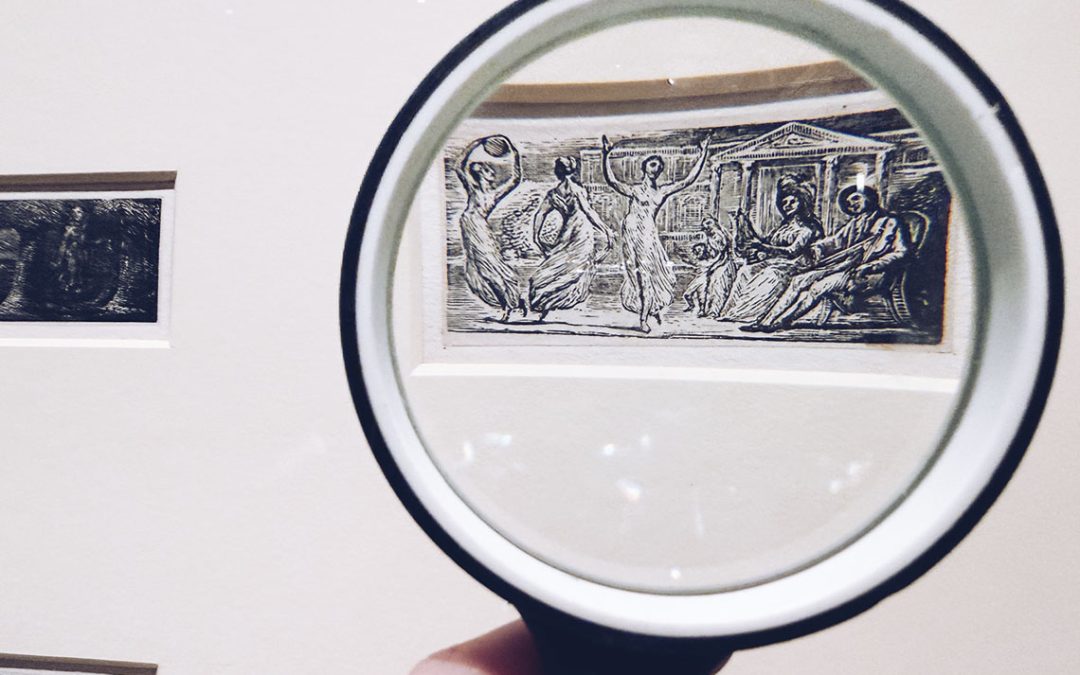
I recently had the pleasure of encountering Blake’s stand-alone work in woodblock printing: The Pastorals of Virgil. Exhibited as part of a wider collection of artists whose work emphasises the technical skill of translating the world around them into miniature printed form, the show places particular emphasis on the tireless work of Northumberland’s most famous printer, Thomas Bewick, whose exquisitely detailed landscapes and studies of nature remain unmatched.
I’d never actually seen these works of Blake’s before, and was initially struck by the density of the ink. The saturation of the print almost obscures each detail and line, the lines becoming amorphous…
On publishing William Blake’s Mysticism: The Legacy of Prophetic Women
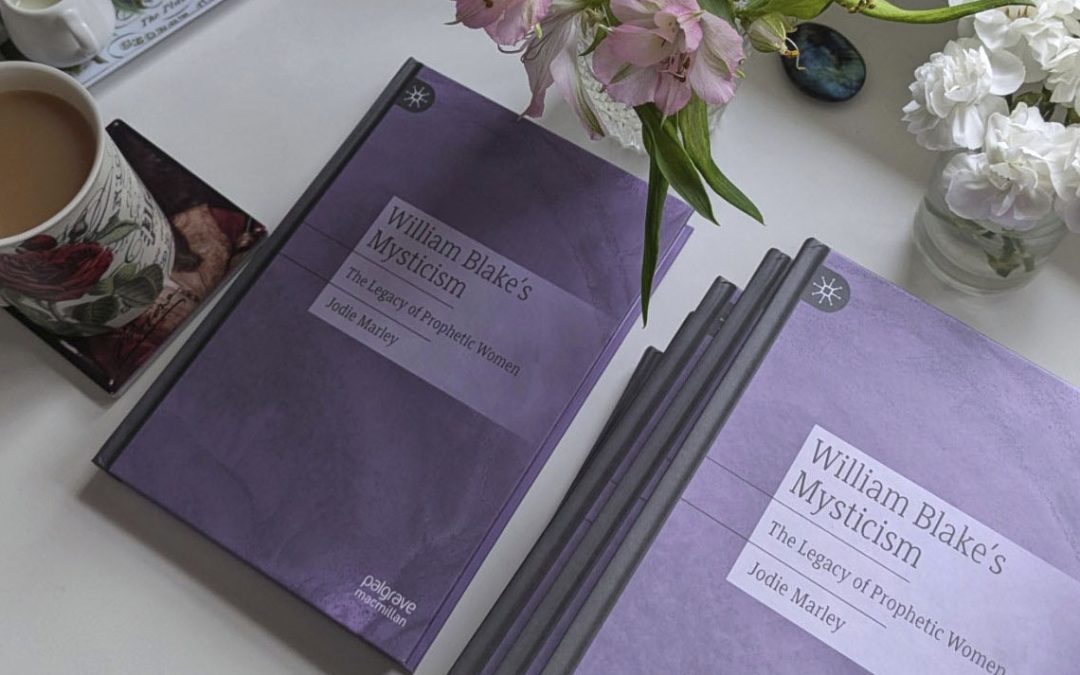
William Blake’s reputation as a mystic has stuck to his art and to his character for centuries. To this day, I’ve visited Blake exhibitions and seen item labels describing his paintings’ mystic themes. My friends in esoteric circles are drawn to Blake’s works because, they believe, his works come from his visions, from his discussions with spiritual beings, from his communications with the divine.
Despite the cultural longevity of Blake’s mysticism, the subject and the word ‘mystic’ have not been popular in Blake studies for around 60 years. Nineteenth-century Blake critics used the word ‘mystic’ to refer to any number of elements of Blake’s work, from his engagement with Swedenborg to the appearance of his Visionary Heads…

Blake Society Trustees 2026
The Annual General Meeting (AGM) of The Blake Society will be held on Zoom on 4 February 2025 at 7.30 PM (UK time). The Annual General Meeting is an opportunity for us to update members and followers about the key events and work of the year. We will also report on accounts and the new ideas and campaigns that we will be taking forward into 2026. This is the meeting at which the Trustees of The Blake Society are formally appointed to serve for the year, so we thought it might be a good time to explain what we do and to reintroduce the 2026 Trustees.

Blake Society Trustees 2025
IThe Annual General Meeting (AGM) of The Blake Society will be held on Zoom on 29 January 2025 at 7.30 PM (UK time). The Annual General Meeting is an opportunity for us to update members and followers about the key events and work of the year. We will also report on accounts and the new ideas and campaigns that we will be taking forward into 2025. This is the meeting at which the Trustees of The Blake Society are formally appointed to serve for the year, so we thought it might be a good time to explain what we do and to reintroduce the current Trustees.

VALA #5: Divine Humanity; or, God appears when we appear godly
Issue 5 of VALA, the journal of The Blake Society, is published on Thursday 28 November 2024 as a free download from our website. There will be an online launch that evening at 7.30 PM, to which all are welcome. Here, Editor of VALA and Chair of The Blake Society, Sibylle Erle, introduces our new issue, with the not inconsiderable theme of ‘God’.
Thou art a Man God is no more
Thy own humanity learn to adore
(The Everlasting Gospel, ll. 71-72, E520) …

Nobodaddy – an interview with Michael Keegan-Dolan
Nobodaddy is a brand-new work by multi-award-winning choreographer and Sadler’s Wells Associate artist Michael Keegan-Dolan and his dance and theatre company Teaċ Daṁsa — a must-see for Blake lovers. Secretary of the Blake Society, Stephen Pritchard, talked to Michael about the production.
The night before I met Michael Keegan-Dolan, who has created the Blake-inspired performance Nobodaddy, at Sadler’s Wells from 27th to the 30th of November, I watched, with fascination, the film of the making of his previous production Mám. The gentle, nurturing manner with which Michael conjured incredible moves from his dancers, created a tsunami of the spirit, expressed through and with the human body. I asked Michael how he first encountered Blake…

‘The Little Black Boy’ – taking stock: Blake, Race and Racism
After the recent exhibition at the Fitzwilliam Museum, Chair of the Blake Society, Dr Sibylle Erle, explores the poem ‘The Little Black Boy’ and its implications for our understanding of race and racism in the work and world of William Blake.
In his Guardian review of ‘William Blake’s Universe’ (23 February 2024), the Blake exhibition at the Fitzwilliam Museum, Jonathan Jones calls Blake a ‘one off’ artist and ‘one of the greatest poets in the English language’. The recognition of Blake’s talents and artistic ambitions are beautifully captured in the title of an exhibition which projects Blake’s mythmaking and refers to European ideas, philosophical traditions and contexts of revolution in equal parts. But Jones, who admires Blake, cannot but be frustrated with an exhibition in which, he claims, Blake is ‘outdone’ by other artists…

Sacred Visions: Blake and First Nations Peoples
As part of St James’s Piccadilly’s Changing Our Minds initiative, Diane Pacitti explores the similarities between the visions of indigenous peoples and William Blake.
He is such a familiar figure. That ancient, white-bearded male stretching out his controlling rod. That joyless but prurient despot who in the guise of the Angel of the Divine Presence seems to fondle Adam and Eve with his huge hands even as he clothes their bodies. A North American or Australian First Nations person might look at Blake’s coercive patriarch and say that this is exactly the white god that colonisers have imposed on indigenous cultures.

Printing Blake in Houston
Trustee of the Blake Society John Riordan writes about his experience printing with the replica Blake press at Rice University, Houston. Earlier this month I had the great privilege of heading to Houston (my first time in Texas) and spending two days printing on the replica Blake press at the Fondren Library, Rice University. The printing press is a modern replica of the 18th century rolling press that Blake would have used, originally created by the Blake scholar and master printer Michael Phillips for his 2014 Blake exhibition at the Ashmolean. The press lived in Oxford for a few years but by a somewhat strange series of events has ended up in Houston, where, by an even stranger quirk of fate (and generosity) I was allowed not only to ogle it but to use it to print replica Blake...

In Memory of Morris Eaves
Trustees and friends of The Blake Society pay tribute to the late, great Morris Eaves. Morris Eaves was one of the most influential Blake scholars in the post-war period, both in terms of his original contributions to knowledge, but also through his editorial work which was incredibly farsighted. He was probably known to most readers through his comprehensive revision of A Blake Dictionary, which offered a golden thread through the complexities of Blake’s often esoteric philosophy and mythology, while his editorship of The Cambridge Companion to William Blake brought together many of the most important scholars of the day to illuminate all aspects of Blake. As an art historian, he transformed our thinking regarding Blake’s works, first by examining Blake’s own ideas more thoroughly in...
Miniature Worlds: Little Landscapes from Thomas Bewick to Beatrix Potter
I recently had the pleasure of encountering Blake’s stand-alone work in woodblock printing: The Pastorals of Virgil. Exhibited as part of a wider collection of artists whose work emphasises the technical skill of translating the world around them into miniature printed form, the show places particular emphasis on the tireless work of Northumberland’s most famous printer, Thomas Bewick, whose exquisitely detailed landscapes and studies of nature remain unmatched.
I’d never actually seen these works of Blake’s before, and was initially struck by the density of the ink. The saturation of the print almost obscures each detail and line, the lines becoming amorphous…
On publishing William Blake’s Mysticism: The Legacy of Prophetic Women
William Blake’s reputation as a mystic has stuck to his art and to his character for centuries. To this day, I’ve visited Blake exhibitions and seen item labels describing his paintings’ mystic themes. My friends in esoteric circles are drawn to Blake’s works because, they believe, his works come from his visions, from his discussions with spiritual beings, from his communications with the divine.
Despite the cultural longevity of Blake’s mysticism, the subject and the word ‘mystic’ have not been popular in Blake studies for around 60 years. Nineteenth-century Blake critics used the word ‘mystic’ to refer to any number of elements of Blake’s work, from his engagement with Swedenborg to the appearance of his Visionary Heads…
Blake Society Trustees 2026
The Annual General Meeting (AGM) of The Blake Society will be held on Zoom on 4 February 2025 at 7.30 PM (UK time). The Annual General Meeting is an opportunity for us to update members and followers about the key events and work of the year. We will also report on accounts and the new ideas and campaigns that we will be taking forward into 2026. This is the meeting at which the Trustees of The Blake Society are formally appointed to serve for the year, so we thought it might be a good time to explain what we do and to reintroduce the 2026 Trustees.
Blake Society Trustees 2025
IThe Annual General Meeting (AGM) of The Blake Society will be held on Zoom on 29 January 2025 at 7.30 PM (UK time). The Annual General Meeting is an opportunity for us to update members and followers about the key events and work of the year. We will also report on accounts and the new ideas and campaigns that we will be taking forward into 2025. This is the meeting at which the Trustees of The Blake Society are formally appointed to serve for the year, so we thought it might be a good time to explain what we do and to reintroduce the current Trustees.
VALA #5: Divine Humanity; or, God appears when we appear godly
Issue 5 of VALA, the journal of The Blake Society, is published on Thursday 28 November 2024 as a free download from our website. There will be an online launch that evening at 7.30 PM, to which all are welcome. Here, Editor of VALA and Chair of The Blake Society, Sibylle Erle, introduces our new issue, with the not inconsiderable theme of ‘God’.
Thou art a Man God is no more
Thy own humanity learn to adore
(The Everlasting Gospel, ll. 71-72, E520) …
Nobodaddy – an interview with Michael Keegan-Dolan
Nobodaddy is a brand-new work by multi-award-winning choreographer and Sadler’s Wells Associate artist Michael Keegan-Dolan and his dance and theatre company Teaċ Daṁsa — a must-see for Blake lovers. Secretary of the Blake Society, Stephen Pritchard, talked to Michael about the production.
The night before I met Michael Keegan-Dolan, who has created the Blake-inspired performance Nobodaddy, at Sadler’s Wells from 27th to the 30th of November, I watched, with fascination, the film of the making of his previous production Mám. The gentle, nurturing manner with which Michael conjured incredible moves from his dancers, created a tsunami of the spirit, expressed through and with the human body. I asked Michael how he first encountered Blake…
‘The Little Black Boy’ – taking stock: Blake, Race and Racism
After the recent exhibition at the Fitzwilliam Museum, Chair of the Blake Society, Dr Sibylle Erle, explores the poem ‘The Little Black Boy’ and its implications for our understanding of race and racism in the work and world of William Blake.
In his Guardian review of ‘William Blake’s Universe’ (23 February 2024), the Blake exhibition at the Fitzwilliam Museum, Jonathan Jones calls Blake a ‘one off’ artist and ‘one of the greatest poets in the English language’. The recognition of Blake’s talents and artistic ambitions are beautifully captured in the title of an exhibition which projects Blake’s mythmaking and refers to European ideas, philosophical traditions and contexts of revolution in equal parts. But Jones, who admires Blake, cannot but be frustrated with an exhibition in which, he claims, Blake is ‘outdone’ by other artists…
Sacred Visions: Blake and First Nations Peoples
As part of St James’s Piccadilly’s Changing Our Minds initiative, Diane Pacitti explores the similarities between the visions of indigenous peoples and William Blake.
He is such a familiar figure. That ancient, white-bearded male stretching out his controlling rod. That joyless but prurient despot who in the guise of the Angel of the Divine Presence seems to fondle Adam and Eve with his huge hands even as he clothes their bodies. A North American or Australian First Nations person might look at Blake’s coercive patriarch and say that this is exactly the white god that colonisers have imposed on indigenous cultures.
Printing Blake in Houston
Trustee of the Blake Society John Riordan writes about his experience printing with the replica Blake press at Rice University, Houston. Earlier this month I had the great privilege of heading to Houston (my first time in Texas) and spending two days printing on the replica Blake press at the Fondren Library, Rice University. The printing press is a modern replica of the 18th century rolling...
In Memory of Morris Eaves
Trustees and friends of The Blake Society pay tribute to the late, great Morris Eaves. Morris Eaves was one of the most influential Blake scholars in the post-war period, both in terms of his original contributions to knowledge, but also through his editorial work which was incredibly farsighted. He was probably known to most readers through his comprehensive revision of A Blake Dictionary,...
Miniature Worlds: Little Landscapes from Thomas Bewick to Beatrix Potter
I recently had the pleasure of encountering Blake’s stand-alone work in woodblock printing: The Pastorals of Virgil. Exhibited as part of a wider collection of artists whose work emphasises the technical skill of translating the world around them into miniature printed form, the show places particular emphasis on the tireless work of Northumberland’s most famous printer, Thomas Bewick, whose exquisitely detailed landscapes and studies of nature remain unmatched.
I’d never actually seen these works of Blake’s before, and was initially struck by the density of the ink. The saturation of the print almost obscures each detail and line, the lines becoming amorphous…
On publishing William Blake’s Mysticism: The Legacy of Prophetic Women
William Blake’s reputation as a mystic has stuck to his art and to his character for centuries. To this day, I’ve visited Blake exhibitions and seen item labels describing his paintings’ mystic themes. My friends in esoteric circles are drawn to Blake’s works because, they believe, his works come from his visions, from his discussions with spiritual beings, from his communications with the divine.
Despite the cultural longevity of Blake’s mysticism, the subject and the word ‘mystic’ have not been popular in Blake studies for around 60 years. Nineteenth-century Blake critics used the word ‘mystic’ to refer to any number of elements of Blake’s work, from his engagement with Swedenborg to the appearance of his Visionary Heads…
Blake Society Trustees 2026
The Annual General Meeting (AGM) of The Blake Society will be held on Zoom on 4 February 2025 at 7.30 PM (UK time). The Annual General Meeting is an opportunity for us to update members and followers about the key events and work of the year. We will also report on accounts and the new ideas and campaigns that we will be taking forward into 2026. This is the meeting at which the Trustees of The Blake Society are formally appointed to serve for the year, so we thought it might be a good time to explain what we do and to reintroduce the 2026 Trustees.
Blake Society Trustees 2025
IThe Annual General Meeting (AGM) of The Blake Society will be held on Zoom on 29 January 2025 at 7.30 PM (UK time). The Annual General Meeting is an opportunity for us to update members and followers about the key events and work of the year. We will also report on accounts and the new ideas and campaigns that we will be taking forward into 2025. This is the meeting at which the Trustees of The Blake Society are formally appointed to serve for the year, so we thought it might be a good time to explain what we do and to reintroduce the current Trustees.
VALA #5: Divine Humanity; or, God appears when we appear godly
Issue 5 of VALA, the journal of The Blake Society, is published on Thursday 28 November 2024 as a free download from our website. There will be an online launch that evening at 7.30 PM, to which all are welcome. Here, Editor of VALA and Chair of The Blake Society, Sibylle Erle, introduces our new issue, with the not inconsiderable theme of ‘God’.
Thou art a Man God is no more
Thy own humanity learn to adore
(The Everlasting Gospel, ll. 71-72, E520) …
Nobodaddy – an interview with Michael Keegan-Dolan
Nobodaddy is a brand-new work by multi-award-winning choreographer and Sadler’s Wells Associate artist Michael Keegan-Dolan and his dance and theatre company Teaċ Daṁsa — a must-see for Blake lovers. Secretary of the Blake Society, Stephen Pritchard, talked to Michael about the production.
The night before I met Michael Keegan-Dolan, who has created the Blake-inspired performance Nobodaddy, at Sadler’s Wells from 27th to the 30th of November, I watched, with fascination, the film of the making of his previous production Mám. The gentle, nurturing manner with which Michael conjured incredible moves from his dancers, created a tsunami of the spirit, expressed through and with the human body. I asked Michael how he first encountered Blake…
‘The Little Black Boy’ – taking stock: Blake, Race and Racism
After the recent exhibition at the Fitzwilliam Museum, Chair of the Blake Society, Dr Sibylle Erle, explores the poem ‘The Little Black Boy’ and its implications for our understanding of race and racism in the work and world of William Blake.
In his Guardian review of ‘William Blake’s Universe’ (23 February 2024), the Blake exhibition at the Fitzwilliam Museum, Jonathan Jones calls Blake a ‘one off’ artist and ‘one of the greatest poets in the English language’. The recognition of Blake’s talents and artistic ambitions are beautifully captured in the title of an exhibition which projects Blake’s mythmaking and refers to European ideas, philosophical traditions and contexts of revolution in equal parts. But Jones, who admires Blake, cannot but be frustrated with an exhibition in which, he claims, Blake is ‘outdone’ by other artists…
Sacred Visions: Blake and First Nations Peoples
As part of St James’s Piccadilly’s Changing Our Minds initiative, Diane Pacitti explores the similarities between the visions of indigenous peoples and William Blake.
He is such a familiar figure. That ancient, white-bearded male stretching out his controlling rod. That joyless but prurient despot who in the guise of the Angel of the Divine Presence seems to fondle Adam and Eve with his huge hands even as he clothes their bodies. A North American or Australian First Nations person might look at Blake’s coercive patriarch and say that this is exactly the white god that colonisers have imposed on indigenous cultures.
Printing Blake in Houston
Trustee of the Blake Society John Riordan writes about his experience printing with the replica Blake press at Rice University, Houston. Earlier this month I had the great privilege of heading to Houston (my first time in Texas) and spending two...
In Memory of Morris Eaves
Trustees and friends of The Blake Society pay tribute to the late, great Morris Eaves. Morris Eaves was one of the most influential Blake scholars in the post-war period, both in terms of his original contributions to knowledge, but also through...