
Reading Blake as an undergraduate convinced me that the best life I could have would be the life of an artist. Since I graduated fifty years ago with Blake by my side I continued this path, teaching painting and drawing and exhibiting my work. About ten years ago my engagement with Blake took a turn; I began to write about him. I have since published several papers on Blake in scholarly journals and have begun writing a book on Blake’s paintings of the Last Judgment.
Since one of the subtitles of The Four Zoas is ‘The Death and Judgment of the Ancient Man’, and the last chapter is entitled the ‘The Last Judgment’, it was obvious that my investigation of Blake’s Last Judgment paintings would require that I engage deeply with this poem. My problem, although I must have read the poem more than a dozen times, is that I could not hold the book in my mind to really think about it. The deleted subtitle ‘a DREAM of Nine Nights’ expressed precisely what my experience of the poem was: a dream that was vivid when experienced but that faded from my memory into a vague blur. Secondary sources helped with understanding the text, but without the narrative of the poem in my own mind, the interpretation of other scholars were not enough for me to grasp and to hold onto The Four Zoas.
I decided I needed to literally picture it, so I began a series of fifty illustrations. My approach in doing these illustrations was not to try to make pictures that would illuminate the text as Blake would have if he had published it himself, but to illustrate it more in the manner that Blake did when he illustrated Milton, Dante, and Bunyon. Following Blake’s manner of illustration, I tried to picture epitomic moments in the narrative. In my presentation, I will discuss how I made these pictures and how this project relates to my other work as an artist.
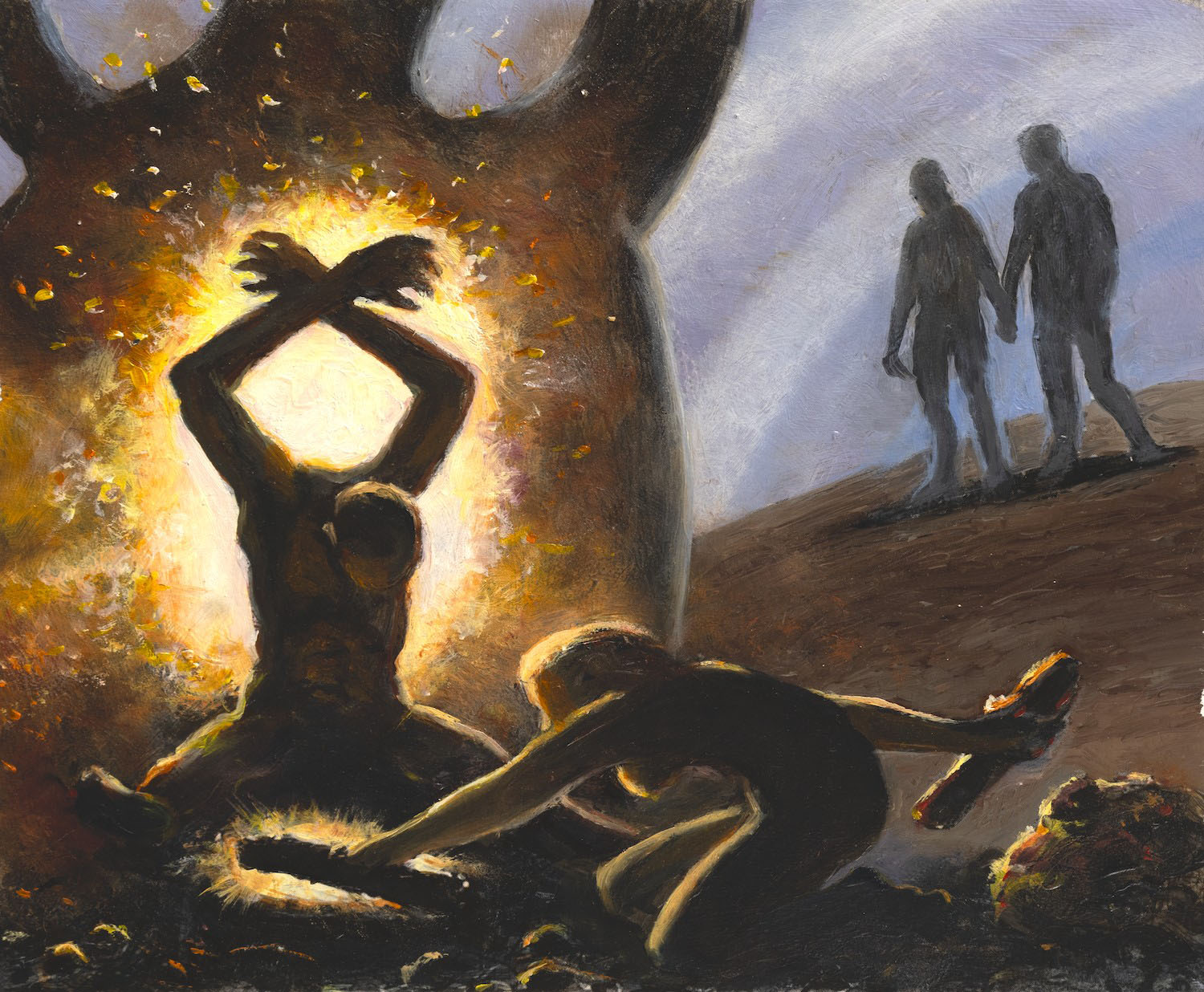
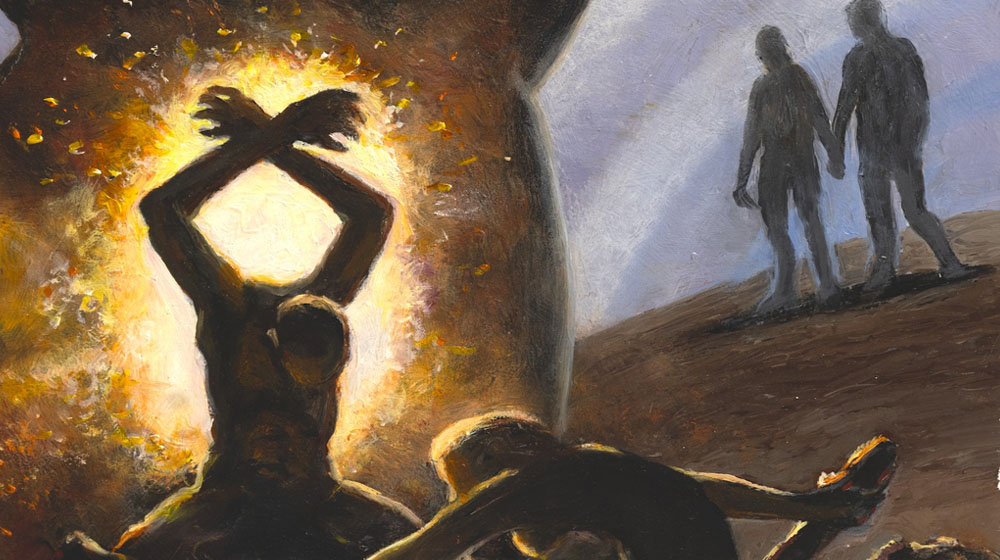
Vala with Luvah, Los and Enitharman look on
Anthony Apesos is a Boston-based fine artist and writer. He paints figures and landscapes that offer moody, often mysterious scenes to the viewer. His paintings suggest narratives that invite viewers to speculate what is happening, allowing them to find their own meaning within the work; while his writing has guided artists and art students in anatomy for several generations.
Using the indirect painting technique of the Old Masters, Apesos emphasises beauty in all aspects of life and death. Drawing on dreams, memory, art history, and his strong artistic compass, he has constructed a profoundly unique and personal aesthetic. As well as his book about anatomy for artists, Anthony is the author of peer-reviewed scholarship, notably: Titan’s Flaying of Marsyas: Colorito Triumphant, Caravaggio’s Taking of Christ: the Artists as Evalgelist, and The Poet in the Poem: Blake’s Milton. He has also written on Blake’s anatomy, and on Blake’s lost painting of The Last Judgement.
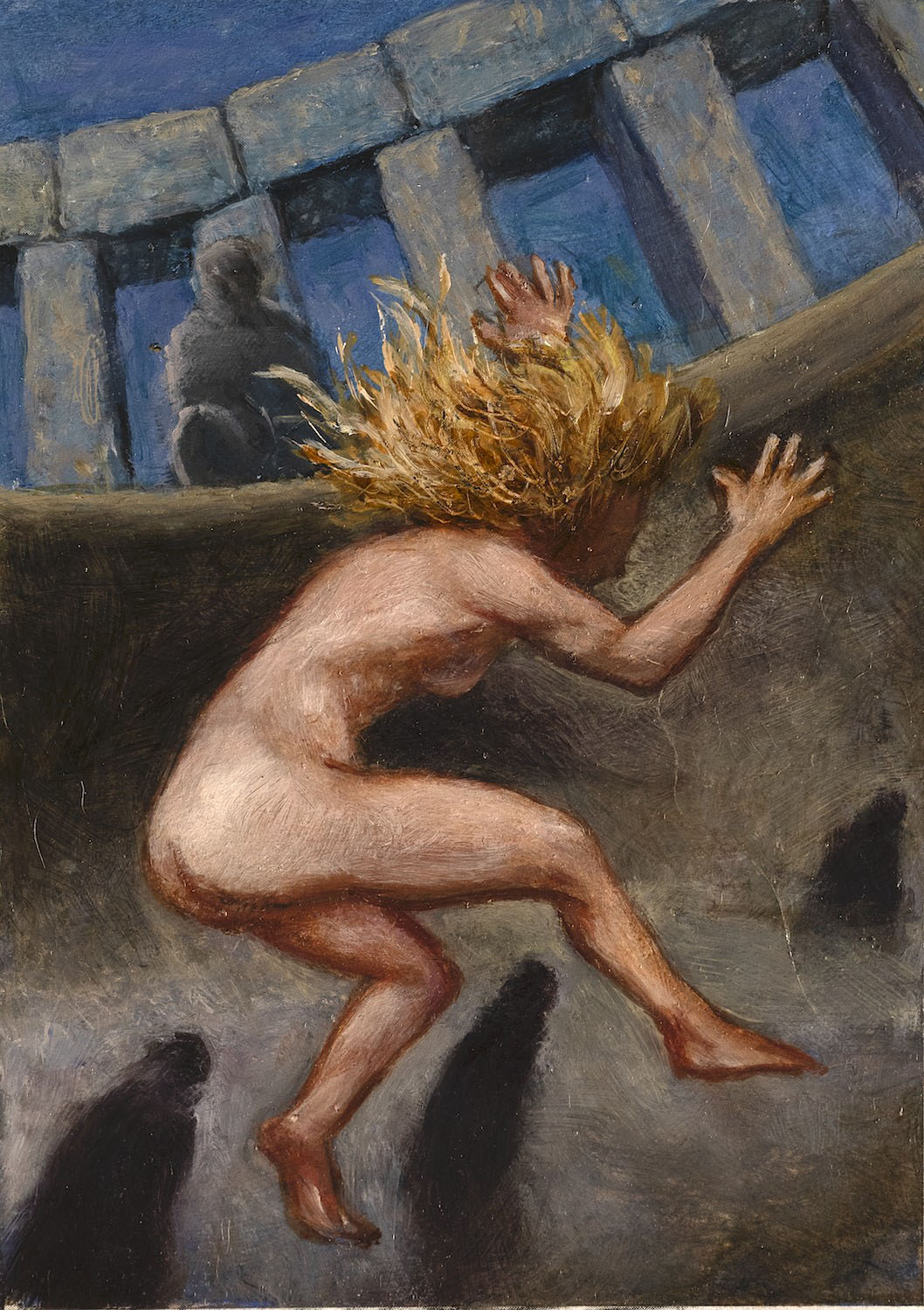
The Expulsion of Ahania