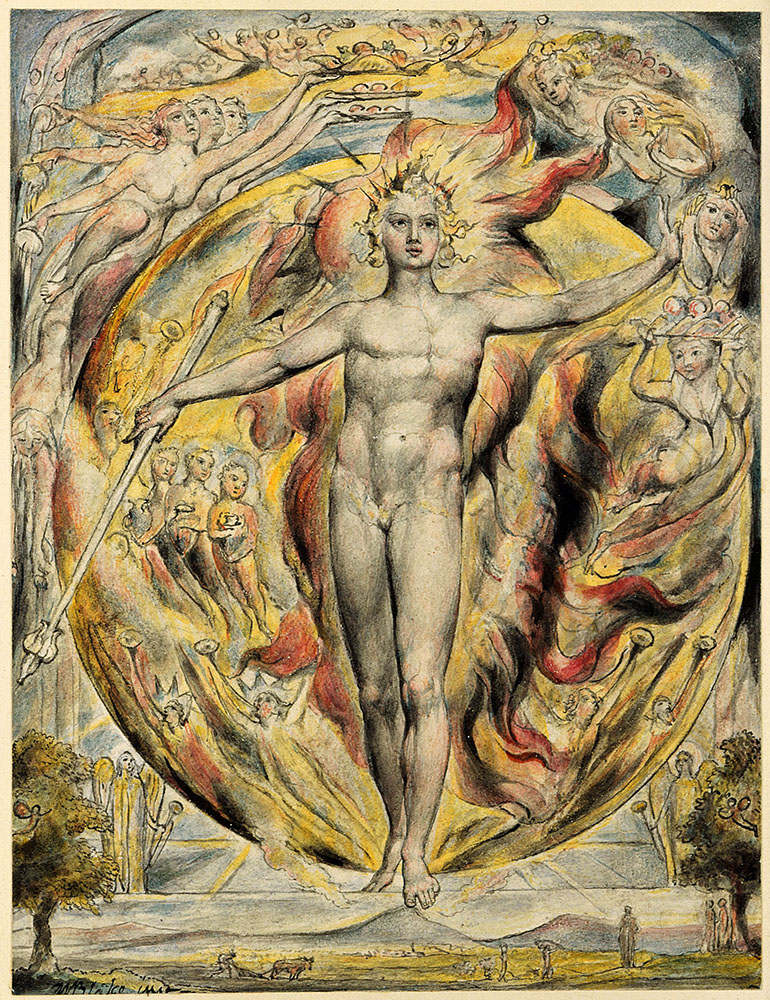
Who are the true heirs to William Blake? Perhaps we should look beyond England and even the global north. And speak of both heirs and ancestors.
Blake speaks of a sacred Energy flowing through the earth and cosmos, into and beyond time. In this he is attuned to the much older world-view. Indigenous peoples inhabit a dynamic cosmos in which plants, rocks and planets are animate beings. Theirs is a unitive vision which contains the dynamic interaction of opposites and rejects the dualistic oppositions of the colonisers. This suggests many parallels with Blake, who affirms progression through contraries and depicts the sun and moon as great pulsing presences.
Blake saw clearly what the reductive materialism that powered industrialism and empire was doing to both oppressed and oppressor, and to the human brain. First Nations peoples felt the full horror of this industrial-colonising machine as they were displaced and slaughtered, the land that was so bound up with their identity appropriated for gain. Blakes’ prophetic anger is now amplified by numerous voices as First Nations peoples express their own fury at historic abuses and articulate both their personal struggles and the richness and wisdom of their cultures.
You are invited to join a distinguished academic and an award-winning Chamoru poet who will explore this theme and invite you into discussion.
Kate Rigby is Alexander van Humboldt Professor of Environmental Humanities at the University of Cologne where she leads a research hub for Multidisciplinary Environmental Studies in the Humanities. Her work explores the intersection of environmental literary, philosophical, historical and religious studies. Her monograph Reclaiming Romanticism: Towards an Ecopoetics of Decolonization discusses Blake in the context of prophetic eco poetics.
Craig Santos Perez is an Indigenous Chamoru from the Pacific Island of Guåhan (Guam). He is editor of nine anthologies and the author of seven books of poetry and the academic monograph, Navigating Chamoru Poetry: Indigeneity, Aesthetics, and Decolonization, which received the MLA Prize for Studies in Native American Literatures, Cultures, and Languages. He has received the American Book Award, the Poetry Society of America Prize, and the National Book Award.
Diane Pacitti, poet and novelist, whose article Sacred Visions and Anger https://www.sjp.org.uk/sacred-visions-blake-and-first-nations-peoples/ was the catalyst for this event, will be the chair.
This event is a collaboration between Earth Justice at St. James’s Church, Piccadilly and The Blake Society.
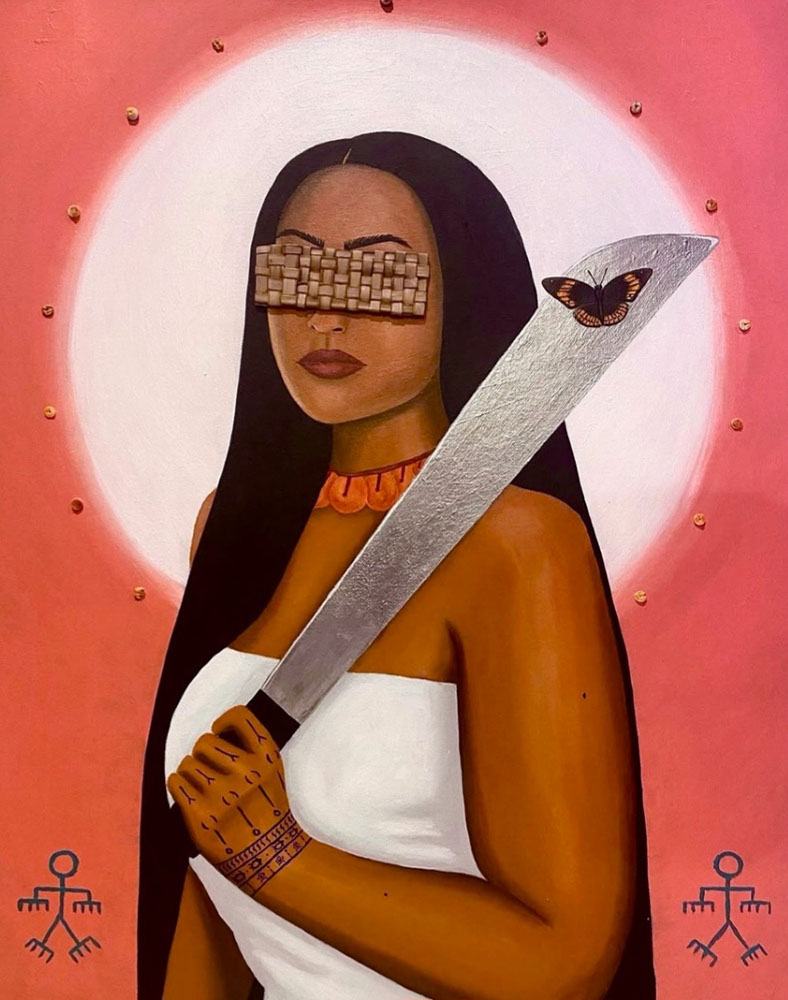
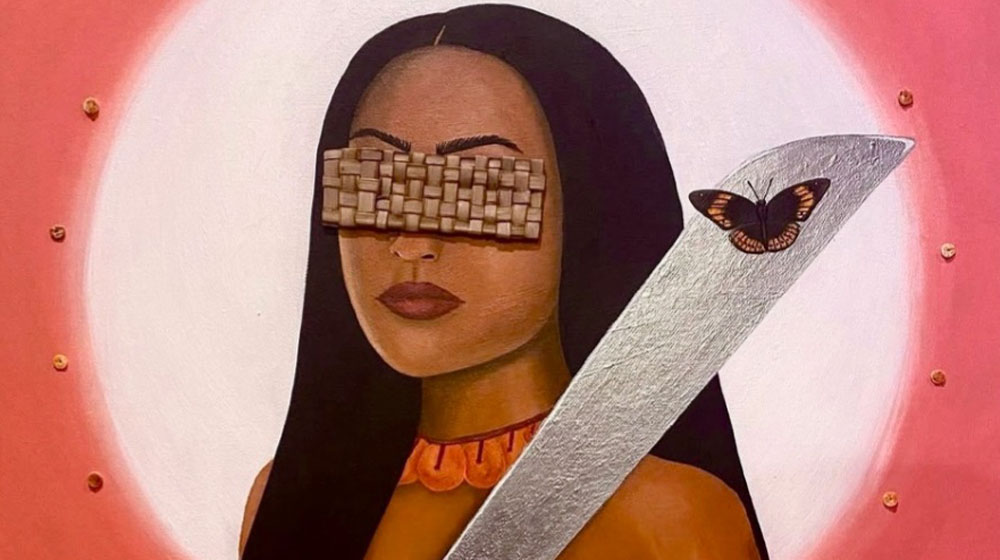
Masakåda My Anger is Sacred by Gillian Duenas